Showing posts with label Everlasting Class. Show all posts

Thursday, 15 November 2012

Friday Reflection

Treading Water!

The Friday reflection has come round again, well Thursday evening. It is Friday already somewhere in the world. Have been having a bit of week of treading water.  A week of considering whether that hillock is the top of the mountain or only anthill that could have been avoided without disturbing the occupants.

To start off with, something that I have learnt this week.  I found out when  reading and posting to Google+  that there was a hump day.  Being in the UK I was a little puzzled.  Camel support day?  But I was politely informed it was Wednesday by another name.  So over the hump I went.

I have had a little review my own personal experiences of completing courses and lack of engagement afterwards.   This led me to conclude that there is a place for the Everlasting Class to become a new forum for professional dialogue.  A Networking opportunity not limited by geographical boundaries.  In a small country like the UK relatively short distances with congested infrastructures are such barriers.  Google+ Hangouts  can be a solution.  I was unable to attend a local meeting of Best of Haverhill , owing to a few conversations via mobile phone, discussing a very worthy topic of reconnecting Haverhill back to the railway.   We had our rail link removed nearly 47 years ago in a so called rationalisation.  In my apologies for absence on the Best of Haverhill Event Facebook page I suggested that a Google+ Hangout or YouTube channel broadcast would be ideal for small business owners to be informed of such an important topic. We will see what comes of that.

On Wednesday (my Hump day apparently)  I blogged on the topic of the changing mantras of UK education.  The article that prompted my meandering  was  thought provoking as it gave insight on the influences of our current Minister for Education.  The book that he was most influenced by according to the article promoted the ideas that there were no individual learning styles.  That rigorous testing was good for the development of learners and should be the norm.  Without having read the book yet I am not in a real position to comment (sitting on the fence?).  I haven't found a Kindle version of the particular book.  Amazon  do have it for sale in print version.  However, I predict that that the book may be a mini-bestseller as every Head Teacher, Deputy Head and journalist will clamour to buy a copy in a bid to understand the future path of education in England and Wales (Scotland has it's own apparatus for mass education).

After one of the pillars educational thought had been questioned how did this affect my perception of Open Learning Communities (OLC also stands for Online Learning Communities).   A reference to the Royal Society in Tuesday's blog and it's origins prompted a comment from one collaborator of the Bank Street OLC.   The  original format for Royal Society meetings was a kind of "show and tell".  He was interested how this element could be introduced into Google+ Hangouts.  Smartphones were mentioned as a possible tech solution.  The new Nexus range launched this week could be in the part of the enabling technology.  Especially if there are front and back mounted cameras that can work independently in separate Hangout Windows.

So how did I do with the plans for this week.  Well I have edged a bit further along the path to coding and producing a Google Course Builder application.  Still a little way off.  Have to catch up with the edX and ALISON courses. Did use Study Room   for the edX course.  Interesting experience, a bit like a game navigating the Avatar to interact with other students.  Have not yet blog posted the updated Virginia Tech thoughts.  May look at the context again to see if it is Learning Style independent.  First thoughts are that it is since it works on the student-instructor continuum.

So for next week.  I will look at how OLC could be set up in the local area for Haverhill and float some ideas.  The coding courses really need to be caught up with and put back on track.  Long Term plan may need to be completed!

Well just about cat is in front of fire.  One side is done the flip side soon to happen.  Think I will join her next to the fire as it starting to become very wintery in Suffolk!  

Tuesday, 13 November 2012

Everlasting Class!

Education for Life Long Learning!

Do you still talk to your teachers?
Do they still talk to you? 


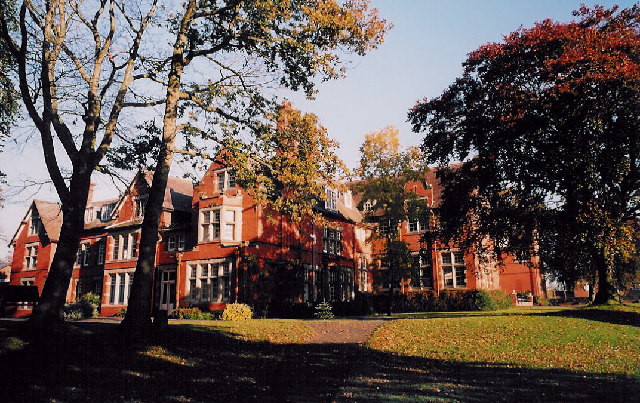
The three shots I have included above and to the right are in no particular order, Harper Adams University College ( formerly Harper Adams Agricultural College), Aberdeen University and Dundee University.  There have been other institutions that I have attended to receive an education in response to changing times other years but these are probably the most traditional.  They are in their own rights National and International leaders certainly in some of the disciplines I which I studied.   All of them were pre-JANET  (a precursor of the Internet in the UK) for undergraduates.   

In discussions within a group based at Bank Street College, New York, the term everlasting class has emerged.  This is a concept which at first looks to be an impossible goal.  How can you have an everlasting class and what makes it everlasting? Is there a topic that can be everlasting? When do you stop being a student? When do you know enough?  Will we still have the same structure and instructor in years to come?

I mentioned the three institutions in the first paragraphs because although I have become well qualified through them, once I received the certificate of competence that was the end of the relationship.   There was no real organisation from their part in promoting continued association or disseminating further knowledge.  The responsibility was over and another commodity created, the graduate.  

Times have moved on.  Now Universities in the UK charge fees an impetus to find out what their students have gone on to achieve has started.  As the system is now "monetised" marketing data is essential.  However, now fees are charged regulation requires a new set of data and tables to explain to students and government the cost-benefit of their efforts in establishing skills for life and Life Long Learning.  As time goes on the term "career" may become superseded by Life Long Learning or an equivalent, since career and job are interchangeable and do not necessarily imply development of skills any more    This development of tables and data is also something that  is referred to when considering with the main choice that faces young UK students.  Do we study at the local institution or do we live away from home and study?

So returning to the everlasting class.  In the grand scheme of education and career development in the traditional professions (Law, Accountancy and Medicine) membership of bodies such as the Law Society,  Royal College of Surgeons and other Chartered Institutes maintained some sort of everlasting class.  However, even these are not connected to the original providers of that training in all cases.

The Bank Street Group is at present moving towards an Open Learning Community (OLC) Model.  This is where a group of similarly interested parties and individuals are exploring how social media tools can be used to promote understanding of the new area of collaborative and peer learning.  Each course that is passed by a student is essentially a record of understanding of historical information at that point in time.  It is not necessarily going to be relevant information in ten years time.   Knowledge and understanding frameworks move too quickly compared to 30 years ago or even 16 years years ago (pre-internet).

With the connected world of the Silicon Age the everlasting class or learning forum could take place.  If I wanted to attend one of my former institutions for a meeting I would have to travel between 170 and 480 miles from Suffolk.  A Google Hangout may be the solution.  Could this be the new dawn for cross disciplinary , industry and local interested groups to take off again?  The Royal Society   and the Spalding Gentleman's Society  started by the same group of people (Sir Isaac Newton was a member of both) initially as an OLC.  As they became more established and formalised they started to become more closed and bureaucratic.  Question is did they promote new inquiry or did they establish conservative habits that stifled new areas owing to personalities and self-interest? 

OLCs have the potential to be the new Dawn of open enquiry in a group.  All educational institutes should have an  OLC to promote discussion as part of everlasting class (IMO).  If not only to prevent knowledge from becoming historical but also to tap into that vast "crowd source" of experience, knowledge and potential research sitting just the other end of the internet!