Showing posts with label OLC. Show all posts

Friday, 22 February 2013

Friday Reflection!

I've seen this before!

Twitter and the real world!

also on holc.co.uk and twitter: @HOLC1

Half-term week in Suffolk and Essex.  Little call on my time from Cambridgeshire so have been working on the Haverhill Online Learning Community.  Have been confident enough in the content and where we are going to start to use the twitter account!  

Twitter does require a bit of effort as I have found over the years that I have had personal twitter accounts.  Finding people to follow is not a problem.  Getting people to follow and continue to follow is the challenge.  Choosing who you follow back when they have followed you is also a judgement call.  Have had this on Google+ Communities recently where obviously some people passionate in their interests  have invited me to some potentially dubious groups that at best conflict a little with the web presence I am trying to maintain.  Once it's out on the web, it's out or exposed so to speak!  Some of the invites are enough to scare the horses (old English saying)!

Gathering pace this week then, HOLC has tweeted a bit,  but not a lot?  In the #fridayreflection for HOLC I have described the meeting I attended yesterday organised by +Elaine Carr of Best of Haverhill at a local hotels' conference venue.  The value of meeting people such as the local mayor and other stakeholder groups will often only reveal themselves on these stages.  You cannot do it all online in a local community you have to meet face to face!  It also provides that personal connection that builds lasting local networks!  

MOOCs this week have seen Coursera become the largest online campus.  The numbers at 2.8 million are still relatively small compared to total populations of students in universities globally but it is massive grow than in just a year!  I struggle at the moment to find the time and inclination to enage with the MOOCs I have signed up for at present.  Work commitments and other interests such as HOLC are taking precedence.  The fact that I already have a Masters and I am not depending on future advancement  upon completing the course are other factors.  It will be interesting to see the measure of drop outs at the end of the first year from the people like myself who have joined out of curiosity to see how they work.  


Genuine figures of engagement of students who are using the MOOC to further their career as opposed to attending a full time residential campus course will be difficult at the measure in my opinion at the moment.  the question will be are they sustainable from a financial point of view?  Should they be sustainable from a financial point of view as a direct replacement for campus based instruction (or do I mean learning)?  Should they be considered as part of the role of providing access to universal education that Universities/Colleges have to satisfy in order to be allowed to grant degrees?

So my reflection for this week is can the MOOC stand on it's own or is it part of the blend of learning offered by Universities and Colleges for the benefit of society?

Next week getting back with the plan for spending more time on the OLC Google + Community that +Jeannie Crowley facilitates and trying to do some Python Programming on the Raspberry Pi


Friday, 16 November 2012

Thoughts on Virginia Tech Model: Part 3

Cognitive Conflict: Piaget and Vygotsky 


The previous blog   looked at the Virginia Tech Model and how it could be extended to include cognitive conflict (defined in previous document).  The model in graphic form (Fig. 1)  was then transformed into a scattergram (Fig. 2).


Fig 1. Graphical representation of Virginia Tech model


Fig 2.  Representation of the Virginia Tech Model in terms of student ownership/engagement  against cognitive conflict.     1. The Audio/Video Tutorial Approach, 2. Personalised system of instruction, 3. Goal Based Scenarios, 4. Case Based Teaching, 5. Guided design, 6. Anchored Instruction,7. Cognitive Apprenticeship,8. Cooperative Learning,9. Constructionist Project based Models,10. Problem based Learning,11. Learning Environments

The transformation of the model into a scattergram allows a pseudo Cartesian co-ordinate plane to be established for the relationship of student ownership and cognitive conflict.  The model shown in the youtube video, mentioned by John Graves (a collaborator in the Bank Street Open Learning Community) in a
personal communication via a Google+ post ,    for the three levels of the revised Bloom’s taxonomy there are three planes of student engagement.  The first plane being the remember, understand apply.  The second plane analyse and evaluate.  The third the creative plane.  (Might need to question the correct usage of the term plane in this context).    It might be best thought of like a game of vertical chess with the student moving between the levels of Revised Bloom’s taxonomy according to the rules of the learning activity and outcome.  


The Zone of Proximal Development (ZPD) is drawn on top of  the Revised Bloom’s Taxonomy’s (RBT) plane.  The ZPD is the  shoulders, so to speak, on which the next  learning is about to stand.  After the learning and understanding the RBT planes extends to encompass the ZPD to become the what you know core.  This then acts as the starting point for the next learning activity and outcome.  This is a constructivist view of the model, and open to discussion as always.  It is also an iterative process that occurs within the overall learning objective (the “blended” use of activities that have their own learning objective to achieve the overall learning objective).  This is the intrinsic relationship between perceived micro and macro learning activities, a bit like a Russian doll.   


Key Question (IMO):     How might RBT and ZPD be represented on a Scattergram model?


Looking at the RBT model we will take 2 plane definition of Lower Order Thinking skills (LOTS) and Higher Order Thinking Skills (HOTS) as a starting point.  This is often referred to by a lot of trainers as fixed definitions.  What might be  LOTS for one group could be  HOTS for others and vice versa.  In other words the instructor needs to embrace the idea flexibilty of task to the approach to learning.  Sometimes difficult to maintain when dealing with the same group throughout  a year where curricula dictate you look at a certain knowledge area but “have to use” HOTS when the group may still be in the realms of LOTS. (But that is a different discussion for another day!).  

Looking at the Vygotsky model of ZPD we have three concentric zones (Fig 3.).   We have the core to the “apple” of what you know, the flesh (mesocarp for the botanically inclined) of the apple which is what you can learn on your own and the “skin” of the apple what you can learn with help.  The “apple” may be a good way of thinking of ZPD in terms of the amount of independent action on the part of the student.  A misshapen “apple” may be used to map the diversity of learners within a group and their relative position to others (another point possibly for development).


Fig 3.  The ZPD model, green represents prior learning (least cognitive conflict), amber represents the application of students knowledge and understanding to new challenges, red represents the greatest cognitive conflict where greater instructor or peer input is needed   
The red zone of Fig 3 is the position where I would expect the social media and collaboration to take place ie the what I can learn with help.  The relative sizes of each zone  would depend on the  learning context.  A MOOC would be more operating in the amber zone while an OLC would be in the realms of the red zone.

On a scattergram I would envisage again green, amber and red zones.  These would be arranged along the cognitive conflict continuum.  An illustrative example is shown in Fig. 4.

Fig 4.  Zones of ZPD superimposed on a Scattergram of Reworked Virginia Tech Model.  Green = What you already know, Amber = What you can learn yourself, Red = Waht you can learn with help from instructor (facilitator) and peers in a social interaction (Numbers represent learning activities from Fig. 2)

The green area extends to the line where cognitive conflict is zero since everything to the left is assumed to learnt and understood and therefore concrete.  (This is an assumption many teachers have make to their peril when trying to use cross curricular skills or a new group of students).  The amber zone is the transition achieved through independent learning using the concrete skills (green zone)  to the point where new learning understanding requires more instruction (the red zone).  As stated previously this might be through the intervention of an instructor or by the use of peer knowledge and peer instruction in an OLC.  This is why I have left activity 3 in it’s position in the 4th quadrant in the red zone
(below the axis where studentship and instructor ownership is zero or of parity between student ownership and instructor ownership).  

The learning activities (the numbers in Fig.4.) can move between the various different quadrants  as would be expected with Individual Education Plans (IEPs) or Group Learning Plans (GLPs).    The activities equally can move between green, amber and red zone.  The zones do not have be fixed on a particular line of cognitive conflict either, I will possibly discuss this in another paper.  

Comments would be appreciated.

Then next step could be to incorporate a degree of grading or using a UK term leveling on the cognitive conflict axis.


There are a lot of very complex interactions between student, instructor, context of learning activity and prior knowledge within the proposed model. Partitioning of the effects of each component and testing their impact becomes a challenge. Developing or applying standard evaluative methodologies to the steps proposed in the development of the Reworked Virginia Tech model requires some though at this time. Possibly a subject for an Open Learning Community!


Thursday, 15 November 2012

Friday Reflection

Treading Water!

The Friday reflection has come round again, well Thursday evening. It is Friday already somewhere in the world. Have been having a bit of week of treading water.  A week of considering whether that hillock is the top of the mountain or only anthill that could have been avoided without disturbing the occupants.

To start off with, something that I have learnt this week.  I found out when  reading and posting to Google+  that there was a hump day.  Being in the UK I was a little puzzled.  Camel support day?  But I was politely informed it was Wednesday by another name.  So over the hump I went.

I have had a little review my own personal experiences of completing courses and lack of engagement afterwards.   This led me to conclude that there is a place for the Everlasting Class to become a new forum for professional dialogue.  A Networking opportunity not limited by geographical boundaries.  In a small country like the UK relatively short distances with congested infrastructures are such barriers.  Google+ Hangouts  can be a solution.  I was unable to attend a local meeting of Best of Haverhill , owing to a few conversations via mobile phone, discussing a very worthy topic of reconnecting Haverhill back to the railway.   We had our rail link removed nearly 47 years ago in a so called rationalisation.  In my apologies for absence on the Best of Haverhill Event Facebook page I suggested that a Google+ Hangout or YouTube channel broadcast would be ideal for small business owners to be informed of such an important topic. We will see what comes of that.

On Wednesday (my Hump day apparently)  I blogged on the topic of the changing mantras of UK education.  The article that prompted my meandering  was  thought provoking as it gave insight on the influences of our current Minister for Education.  The book that he was most influenced by according to the article promoted the ideas that there were no individual learning styles.  That rigorous testing was good for the development of learners and should be the norm.  Without having read the book yet I am not in a real position to comment (sitting on the fence?).  I haven't found a Kindle version of the particular book.  Amazon  do have it for sale in print version.  However, I predict that that the book may be a mini-bestseller as every Head Teacher, Deputy Head and journalist will clamour to buy a copy in a bid to understand the future path of education in England and Wales (Scotland has it's own apparatus for mass education).

After one of the pillars educational thought had been questioned how did this affect my perception of Open Learning Communities (OLC also stands for Online Learning Communities).   A reference to the Royal Society in Tuesday's blog and it's origins prompted a comment from one collaborator of the Bank Street OLC.   The  original format for Royal Society meetings was a kind of "show and tell".  He was interested how this element could be introduced into Google+ Hangouts.  Smartphones were mentioned as a possible tech solution.  The new Nexus range launched this week could be in the part of the enabling technology.  Especially if there are front and back mounted cameras that can work independently in separate Hangout Windows.

So how did I do with the plans for this week.  Well I have edged a bit further along the path to coding and producing a Google Course Builder application.  Still a little way off.  Have to catch up with the edX and ALISON courses. Did use Study Room   for the edX course.  Interesting experience, a bit like a game navigating the Avatar to interact with other students.  Have not yet blog posted the updated Virginia Tech thoughts.  May look at the context again to see if it is Learning Style independent.  First thoughts are that it is since it works on the student-instructor continuum.

So for next week.  I will look at how OLC could be set up in the local area for Haverhill and float some ideas.  The coding courses really need to be caught up with and put back on track.  Long Term plan may need to be completed!

Well just about cat is in front of fire.  One side is done the flip side soon to happen.  Think I will join her next to the fire as it starting to become very wintery in Suffolk!  

Tuesday, 13 November 2012

Everlasting Class!

Education for Life Long Learning!

Do you still talk to your teachers?
Do they still talk to you? 


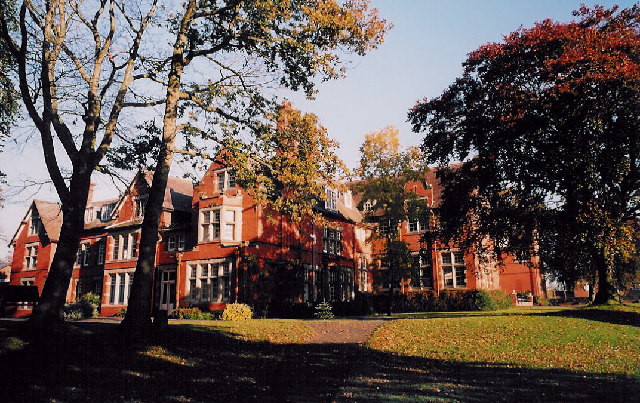
The three shots I have included above and to the right are in no particular order, Harper Adams University College ( formerly Harper Adams Agricultural College), Aberdeen University and Dundee University.  There have been other institutions that I have attended to receive an education in response to changing times other years but these are probably the most traditional.  They are in their own rights National and International leaders certainly in some of the disciplines I which I studied.   All of them were pre-JANET  (a precursor of the Internet in the UK) for undergraduates.   

In discussions within a group based at Bank Street College, New York, the term everlasting class has emerged.  This is a concept which at first looks to be an impossible goal.  How can you have an everlasting class and what makes it everlasting? Is there a topic that can be everlasting? When do you stop being a student? When do you know enough?  Will we still have the same structure and instructor in years to come?

I mentioned the three institutions in the first paragraphs because although I have become well qualified through them, once I received the certificate of competence that was the end of the relationship.   There was no real organisation from their part in promoting continued association or disseminating further knowledge.  The responsibility was over and another commodity created, the graduate.  

Times have moved on.  Now Universities in the UK charge fees an impetus to find out what their students have gone on to achieve has started.  As the system is now "monetised" marketing data is essential.  However, now fees are charged regulation requires a new set of data and tables to explain to students and government the cost-benefit of their efforts in establishing skills for life and Life Long Learning.  As time goes on the term "career" may become superseded by Life Long Learning or an equivalent, since career and job are interchangeable and do not necessarily imply development of skills any more    This development of tables and data is also something that  is referred to when considering with the main choice that faces young UK students.  Do we study at the local institution or do we live away from home and study?

So returning to the everlasting class.  In the grand scheme of education and career development in the traditional professions (Law, Accountancy and Medicine) membership of bodies such as the Law Society,  Royal College of Surgeons and other Chartered Institutes maintained some sort of everlasting class.  However, even these are not connected to the original providers of that training in all cases.

The Bank Street Group is at present moving towards an Open Learning Community (OLC) Model.  This is where a group of similarly interested parties and individuals are exploring how social media tools can be used to promote understanding of the new area of collaborative and peer learning.  Each course that is passed by a student is essentially a record of understanding of historical information at that point in time.  It is not necessarily going to be relevant information in ten years time.   Knowledge and understanding frameworks move too quickly compared to 30 years ago or even 16 years years ago (pre-internet).

With the connected world of the Silicon Age the everlasting class or learning forum could take place.  If I wanted to attend one of my former institutions for a meeting I would have to travel between 170 and 480 miles from Suffolk.  A Google Hangout may be the solution.  Could this be the new dawn for cross disciplinary , industry and local interested groups to take off again?  The Royal Society   and the Spalding Gentleman's Society  started by the same group of people (Sir Isaac Newton was a member of both) initially as an OLC.  As they became more established and formalised they started to become more closed and bureaucratic.  Question is did they promote new inquiry or did they establish conservative habits that stifled new areas owing to personalities and self-interest? 

OLCs have the potential to be the new Dawn of open enquiry in a group.  All educational institutes should have an  OLC to promote discussion as part of everlasting class (IMO).  If not only to prevent knowledge from becoming historical but also to tap into that vast "crowd source" of experience, knowledge and potential research sitting just the other end of the internet!                 

Friday, 9 November 2012

Friday Reflection

Online and overland communication!

In a week when Sandy premièred in New York followed by snow,  the power of the internet for meetings and connections was for me reinforced.  The Wednesday hook up or Hangout happened  attended by other members of the Bank Street OLC.  Microphone problems aside it was possible to carry out a meeting, even though I was resorting to chat messaging, that was a thoughtful and provided new perspectives for my own practice.  The fact we could speak in real time across three continental shelves leads to greater understanding of for example terminology and other descriptions of online learning activites.

This week I have been chipping away at my own black box understanding where coding and computer science is concerned.  I am part the way through an Alison Diploma course on Programming in C.  The basis to the reasoning for attempting this I have blogged about in my last post.  I have had a look at the Wiki pages for Google Course Builder and will start looking at putting the materials together for Project Scratch.  This is a  CPD project for teachers to start to learn how to code using Scratch.

Thursday, yesterday, I embarked on an overland journey to talk to a small, expanding company run by very pleasant people. They have selected a particular niche in the online education sector.     Delivering learning to groups of pupils via virtual learning environments.  The model they are following is try to get the pupil to be immersed in the activity and have ownership. 

They are based in South Gloucestershire   After becoming lost trying to follow Google maps and drive at the same time I can understand why. The nature of 21st Century working is Teleworking (a representative organisation in the UK is the  Telework Association).  Their's is a prime example of this activity. 

Fish Hill a 1 in 10 hill with great views
A Cotswold town
So after driving down Fish Hill (and back up again) I arrived in the Cotswold town.  As you can see a chocolate box High Street.  It is close to Sudeley Castle.  Having spent nearly five hours getting there I have to say the purchase of a discounted Road Map most valuable item bought this month (silly me thought I could just rely on Google Maps' directions forgetting the vagaries of UK highways Authorities signage and desire to redesign road layouts).  Prior to this purchase I had been following my nose and luckily it was working properly and I was only 15 miles from where I needed to be.  The map will be accompanying me Google Maps just there to calculate journey mileage and potential time!!  A lot of miles (500 or so) to eventually get back to Suffolk at about 4.30 pm, (left at 5.30 am that morning) but worth the trip to see how others are approaching the task of online learning.

Returning back to the reflection.  Last week I set myself the task of looking further at the Virginia Tech Model of learning activities .  I have developed my thinking a little further to include representation of the model as scattergram.  Included has been the step to incorporated a the model of Revised Bloom's Taxonomy and Vygotsky's Zone of Proximal Development.  This has been shared with members of the Bank  Street College OLC.  I will update the blog later to show the new model additions.

So for next week.  To pursue further leads for collaboration within the OLC group to move forward Project Scratch.  Blogcast the ideas of extending the Virginia Tech Model.  Continue to look at coding since we have an OLC deadline/waymark coming up and want to be able to have at least an outline project working.  Like the idea behind the NYC Learning Hive.  Have viewed the new initiatives launched in the UK by Mozilla.  A Hive or OLC is really appealing to set up with local volunteer centre (for whom I work with from time to time) and the local council.

Weekend starts here, POETS day being enforced (Push Off Early Tomorrow's Saturday!).
 

Friday, 2 November 2012

OFLC - Online Faculty Learning Communities

Whaaaaaat? Friday Already???

Friday Reflection

A busy week not just with OFLC but other online learning experiences via edX and ALISON.  The last Friday reflection  seems a long time ago now.  So in 500 words or less how have my  personal targets been met for OFLC set by me last week.  

Two main goals for this week were to set up a Medium Term Plan and Long Term Plan.  The Medium Term Plan was posted into the OFLC Google Group Drive (like this feature will have to investigate GoogleGroups further for some of my own projects).  We are at the stage of proposing projects and coalescing into working collaborations.  The initiation phase has been a feature of this week with facilitation of group make up being the next step.  Sharing has been  happening with OFLC which is great and promotes confidence in exchanging ideas.

The Long Term Plan is at the stage of being for personal consumption. As it becomes more fleshed out in the next week or so with aspirational targets for the next year I will then share. For me Long Term Plan is anything from 3 months to a Year in the future.  I use the term aspirational since all plans are subject to change and review as experiences dictate.  The trick with Long Term and Medium Term Plans is to realise that they are just that, plans.  Investment  in  collaboration/ownership  and setting realistic review schedules is the basis for successful projects that have lasting longevity.  The "there are no problems only solutions" mantra is often used as a summation of this approach.  It does rely on leadership within a group being a shifting fulcrum as opposed to management of the group.

So goals for Online Learning for the next week.   Have made a few detours this week into considering the wider role of Online Courses and OFLC in society and especially the Third Age of Man.   Having both parents involved in the University of the Third Age  (U3A).  I am aware through talking to parents of the vast repository of knowledge that still resides with active older people.  My father has an interest in Pewter, history and digital photography and regularly gives talks to the local group.  One of the tools that I have come across with involvement in the OFLC (OLC) is SlideSpeach.  This tool transforms a presentation (PowerPoint, Open Office, GoogleDocs) and slide notes into an audio and visual experience without having to use complex video authoring packages.  A worthy tool for preserving talks made within the context of  the U3A.  So a project for this week is to teach/lead father into recording his thoughts on diverse subjects with SlideSpeach.  Could be a trying experience for Tech Support (me) since although he is a retired electrical engineer he is more analogue and 3000v than digital.  Operator error is not a term he readily admits to where computers are concerned!  

Development of the Virginia Tech Model is ongoing.  I am in the process of investigating working with an Online Tutoring company as a contractor/supply teacher on specific delivery of teaching to individual students.  I believe the development of this model provides me with understanding of what is a relatively new field that could be constricted if traditional models of instruction are adopted.   

So a few things to be going on with for the next week!