Wednesday, 14 November 2012

Can the Individual in the room please sit down?

A Personal Reflection of Trends in perception of the Learner in UK Education

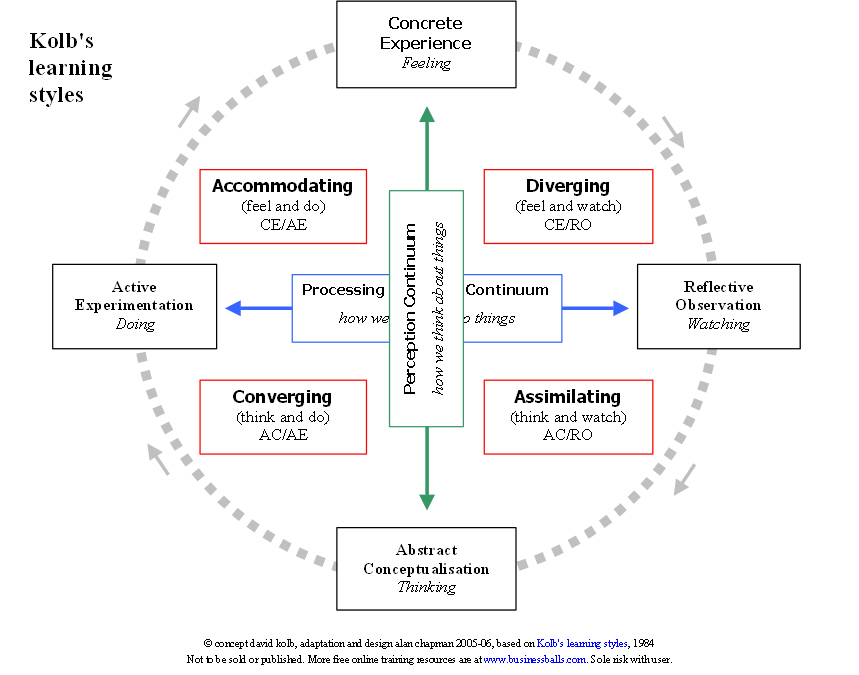
A look at the diagram to the left show's a mainstay of what has been part of British Education practice for a number of years.  The use of Learning Styles has been part of CPD in English schools through out  the drive of the implementation and improvement of the national curriculum towards individual learning. 

I have personally received many photocopied transcripts of how we should tailor individual learning plans to the student.  The idea that everybody learns differently has been an unwritten law (as opposed to theory).  Tailoring the learning process to individual perceptions of how they learn has passed into educational aspiration and often Ofsted criteria.  

A few years ago in the institution that I worked in one of the first lessons of the year in PSHE (Personal, Social and  Health Education) was to survey the pupils and decide with them which Kolb learning style they fitted into.  They were then instructed to write it down in their planner.  The grand scheme was to gather the data together at school level to inform teaching and shape individual learning experiences.  The staff were informed for a few weeks after that senior staff would be making drop-in visits to classes and asking children if they knew their individual learning styles.  Ofsted then came and went.  The effort to pursue the Individual Learning Plan along the Every Child Matters and every child is a child with special needs was somewhat lost in the mist.

The idea of Thinking skills  has been part of supportive Science teaching for a few years through CASE (Cognitive Acceleration for Science Education).  A similar project CAME has been formulated for a few years.  The basis of the work is the theories of Piaget and Vygotsky.  The CASE approach, which I have taught myself, is a set of activities teaching skills in addition to present national curriculum.  It does produce results in improving  thinking skills.  However, the difficulty in quantifying thinking skills and Piagetian levels against the framework of the national curriculum has been difficult.  The difficulty is such that time investment in  developing these critical skills is not pursued since they do not appear  to add any intrinsic to data that feeds into league tables.

The focus on thinking skills has also briefly seen an interest in Edward De Bono's Six Hats  (apprently used by the British Civil Service).  Again this was a CPD fashion at one point (along with later Emotional Intelligence) but we did need to have a bigger hat  stand at the time to be able store the new apparel. Thinking skills is still a topic kicked around on the pitch of English educational thinking.  I am trying to be neutral and to stress the benefits.  However, as has happened with the reactive nature of the way the National curriculum has developed there is never enough time to see the final result.  There appears no willingness for a second half (to continue the analogy) or the extra time goal  that makes all the effort worthwhile.  The analogy of rolling the rock to the top of the hill springs to mind. Pausing half way up for a little bird (as in a little bird told me something else) to sit atop the rock.  The rock starts to roll back down the hill with the added information.

So what has prompted this lurch through the potted history of UK educational thought in the last 15 years (yes only 15 years)?   I read an article on the BBC website reporting the Education Ministers' Michael Goves' intention to speak at a conference on Wednesday (today).  In the article we are informed that the major influence on Michael Goves' thinking comes from Dan Willingham,  a cognitive scientist.  The main thrust of his work proposes that Learning  Styles do not actually exist.  Dan Willingham's book  "Why Don't Student's Like School?" will be worth reading to see the road map for education up to 2015 and beyond.  Personally I think, he could have thought of a better title since the implication is that at the moment all pupils do not like school.  However, this does reinforce the natural English reaction to education promoted by media to a large extent.            

The reaction to the speach will be interesting to know later today.  The fact that a cognitive scientist is becoming an influence is encouraging.  How this fits with the drive to instil knowledge compared to understanding will be an interesting path to follow!

How the idea of their being no Learning Styles affects Online Learning and Open Learning Communities is an area for further exploration.





Tuesday, 13 November 2012

Everlasting Class!

Education for Life Long Learning!

Do you still talk to your teachers?
Do they still talk to you? 


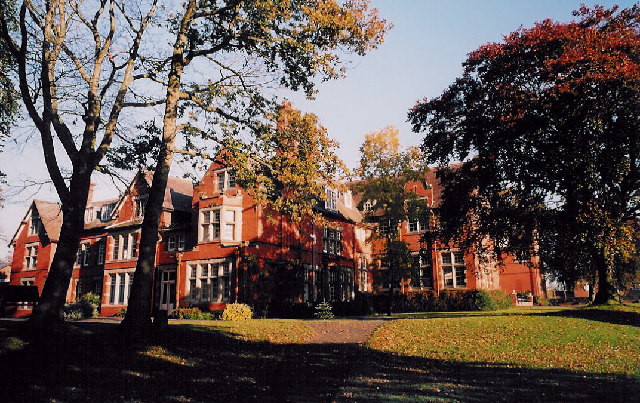
The three shots I have included above and to the right are in no particular order, Harper Adams University College ( formerly Harper Adams Agricultural College), Aberdeen University and Dundee University.  There have been other institutions that I have attended to receive an education in response to changing times other years but these are probably the most traditional.  They are in their own rights National and International leaders certainly in some of the disciplines I which I studied.   All of them were pre-JANET  (a precursor of the Internet in the UK) for undergraduates.   

In discussions within a group based at Bank Street College, New York, the term everlasting class has emerged.  This is a concept which at first looks to be an impossible goal.  How can you have an everlasting class and what makes it everlasting? Is there a topic that can be everlasting? When do you stop being a student? When do you know enough?  Will we still have the same structure and instructor in years to come?

I mentioned the three institutions in the first paragraphs because although I have become well qualified through them, once I received the certificate of competence that was the end of the relationship.   There was no real organisation from their part in promoting continued association or disseminating further knowledge.  The responsibility was over and another commodity created, the graduate.  

Times have moved on.  Now Universities in the UK charge fees an impetus to find out what their students have gone on to achieve has started.  As the system is now "monetised" marketing data is essential.  However, now fees are charged regulation requires a new set of data and tables to explain to students and government the cost-benefit of their efforts in establishing skills for life and Life Long Learning.  As time goes on the term "career" may become superseded by Life Long Learning or an equivalent, since career and job are interchangeable and do not necessarily imply development of skills any more    This development of tables and data is also something that  is referred to when considering with the main choice that faces young UK students.  Do we study at the local institution or do we live away from home and study?

So returning to the everlasting class.  In the grand scheme of education and career development in the traditional professions (Law, Accountancy and Medicine) membership of bodies such as the Law Society,  Royal College of Surgeons and other Chartered Institutes maintained some sort of everlasting class.  However, even these are not connected to the original providers of that training in all cases.

The Bank Street Group is at present moving towards an Open Learning Community (OLC) Model.  This is where a group of similarly interested parties and individuals are exploring how social media tools can be used to promote understanding of the new area of collaborative and peer learning.  Each course that is passed by a student is essentially a record of understanding of historical information at that point in time.  It is not necessarily going to be relevant information in ten years time.   Knowledge and understanding frameworks move too quickly compared to 30 years ago or even 16 years years ago (pre-internet).

With the connected world of the Silicon Age the everlasting class or learning forum could take place.  If I wanted to attend one of my former institutions for a meeting I would have to travel between 170 and 480 miles from Suffolk.  A Google Hangout may be the solution.  Could this be the new dawn for cross disciplinary , industry and local interested groups to take off again?  The Royal Society   and the Spalding Gentleman's Society  started by the same group of people (Sir Isaac Newton was a member of both) initially as an OLC.  As they became more established and formalised they started to become more closed and bureaucratic.  Question is did they promote new inquiry or did they establish conservative habits that stifled new areas owing to personalities and self-interest? 

OLCs have the potential to be the new Dawn of open enquiry in a group.  All educational institutes should have an  OLC to promote discussion as part of everlasting class (IMO).  If not only to prevent knowledge from becoming historical but also to tap into that vast "crowd source" of experience, knowledge and potential research sitting just the other end of the internet!                 

Friday, 9 November 2012

Friday Reflection

Online and overland communication!

In a week when Sandy premièred in New York followed by snow,  the power of the internet for meetings and connections was for me reinforced.  The Wednesday hook up or Hangout happened  attended by other members of the Bank Street OLC.  Microphone problems aside it was possible to carry out a meeting, even though I was resorting to chat messaging, that was a thoughtful and provided new perspectives for my own practice.  The fact we could speak in real time across three continental shelves leads to greater understanding of for example terminology and other descriptions of online learning activites.

This week I have been chipping away at my own black box understanding where coding and computer science is concerned.  I am part the way through an Alison Diploma course on Programming in C.  The basis to the reasoning for attempting this I have blogged about in my last post.  I have had a look at the Wiki pages for Google Course Builder and will start looking at putting the materials together for Project Scratch.  This is a  CPD project for teachers to start to learn how to code using Scratch.

Thursday, yesterday, I embarked on an overland journey to talk to a small, expanding company run by very pleasant people. They have selected a particular niche in the online education sector.     Delivering learning to groups of pupils via virtual learning environments.  The model they are following is try to get the pupil to be immersed in the activity and have ownership. 

They are based in South Gloucestershire   After becoming lost trying to follow Google maps and drive at the same time I can understand why. The nature of 21st Century working is Teleworking (a representative organisation in the UK is the  Telework Association).  Their's is a prime example of this activity. 

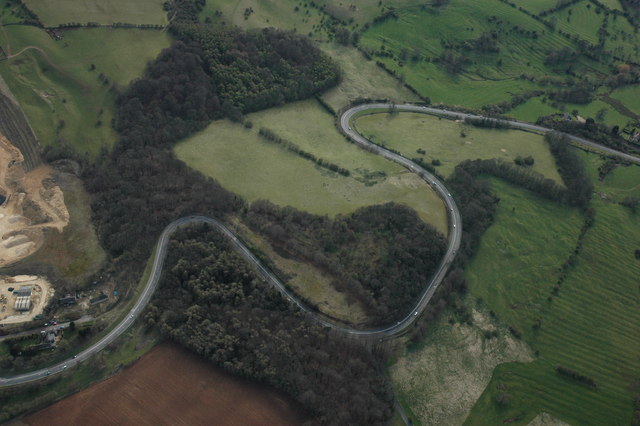
Fish Hill a 1 in 10 hill with great views
A Cotswold town
So after driving down Fish Hill (and back up again) I arrived in the Cotswold town.  As you can see a chocolate box High Street.  It is close to Sudeley Castle.  Having spent nearly five hours getting there I have to say the purchase of a discounted Road Map most valuable item bought this month (silly me thought I could just rely on Google Maps' directions forgetting the vagaries of UK highways Authorities signage and desire to redesign road layouts).  Prior to this purchase I had been following my nose and luckily it was working properly and I was only 15 miles from where I needed to be.  The map will be accompanying me Google Maps just there to calculate journey mileage and potential time!!  A lot of miles (500 or so) to eventually get back to Suffolk at about 4.30 pm, (left at 5.30 am that morning) but worth the trip to see how others are approaching the task of online learning.

Returning back to the reflection.  Last week I set myself the task of looking further at the Virginia Tech Model of learning activities .  I have developed my thinking a little further to include representation of the model as scattergram.  Included has been the step to incorporated a the model of Revised Bloom's Taxonomy and Vygotsky's Zone of Proximal Development.  This has been shared with members of the Bank  Street College OLC.  I will update the blog later to show the new model additions.

So for next week.  To pursue further leads for collaboration within the OLC group to move forward Project Scratch.  Blogcast the ideas of extending the Virginia Tech Model.  Continue to look at coding since we have an OLC deadline/waymark coming up and want to be able to have at least an outline project working.  Like the idea behind the NYC Learning Hive.  Have viewed the new initiatives launched in the UK by Mozilla.  A Hive or OLC is really appealing to set up with local volunteer centre (for whom I work with from time to time) and the local council.

Weekend starts here, POETS day being enforced (Push Off Early Tomorrow's Saturday!).
 

Tuesday, 6 November 2012

Coding for Google Course Builder

Stepping up to Code

Over the past fifteen years or so I have flirted with coding in my position as Head of Science and Head of ICT in a middle school.  The requirements for coding has not been a part of the UK education systems' relationship with computers in the classroom.  The use of WYSWYG applications such as Macromedia Flash, Microsoft's FrontPage is about as close as most  teachers of ICT have come to coding.  We now have a need for coding skills in schools.   

Having tinkered about with coding in HTML and other languages along with  a very long ago remembered relationship with early BASIC and Machine Code a formal "Hello World" approach was needed.  So looking for a "modern" start I enrolled on the edX course Computer Science CS50x.  This is a whole semester course (half an academic year to those of us used to British University systems of terms).  So far this has been a great course, something that should feature in Year 1 of all UK university courses no matter what your discipline as a core passing course (ie you not do have a grade just pass or fail).  Certainly something similar  would have been useful later when I was grappling with analysing data from large field and pot experiments for efficacy of fertilisers.

For the short term I needed to get up to speed again (?) very quickly with how to code.  I selected a course from ALISON.com , Diploma in Programming in C.  Having had a little experience with C,  I started to work my way through the course.  A little hard to follow as a lot of information delivered by white board and screen capture, since there are no notes to download.  This is in contrast with the edX course where there are full transcripts of the lecture and the possibility to download resources to go on your iPod Touch, MP3 player, PDF on Kindle etc.  The ALISON course is quite taxing on the memory where assessments come about with 80% pass rate needed for the assessment.  It is possible to bale out and restart the start the test.  I needed to do this twice since the string reading for the answer and the  question were often not specific enough to allow success.  A feature of validation is that at any time after certification you can  login and sit a test again to validate your understanding for anybody that is interested.  This makes sure that skills are maintained to be current apparently.

So tools downloaded and followed  so far with ALISON are the Codeblocks C++ compiler .  A useful website is  Codepad which is an online compiler and more importantly also covers Python.  Python is used with the SDK AppEngine to create Google Course Builder e-Learning Courses.   Python also seems to be embraced as well by the Raspberry Pi community.  

So conclusion can now programme a little more efficiently  in C++ with a better understanding of the Computer Science.  Next step is to start to get to grips with Python and look to writing a Google Course Builder App!  

Friday, 2 November 2012

OFLC - Online Faculty Learning Communities

Whaaaaaat? Friday Already???

Friday Reflection

A busy week not just with OFLC but other online learning experiences via edX and ALISON.  The last Friday reflection  seems a long time ago now.  So in 500 words or less how have my  personal targets been met for OFLC set by me last week.  

Two main goals for this week were to set up a Medium Term Plan and Long Term Plan.  The Medium Term Plan was posted into the OFLC Google Group Drive (like this feature will have to investigate GoogleGroups further for some of my own projects).  We are at the stage of proposing projects and coalescing into working collaborations.  The initiation phase has been a feature of this week with facilitation of group make up being the next step.  Sharing has been  happening with OFLC which is great and promotes confidence in exchanging ideas.

The Long Term Plan is at the stage of being for personal consumption. As it becomes more fleshed out in the next week or so with aspirational targets for the next year I will then share. For me Long Term Plan is anything from 3 months to a Year in the future.  I use the term aspirational since all plans are subject to change and review as experiences dictate.  The trick with Long Term and Medium Term Plans is to realise that they are just that, plans.  Investment  in  collaboration/ownership  and setting realistic review schedules is the basis for successful projects that have lasting longevity.  The "there are no problems only solutions" mantra is often used as a summation of this approach.  It does rely on leadership within a group being a shifting fulcrum as opposed to management of the group.

So goals for Online Learning for the next week.   Have made a few detours this week into considering the wider role of Online Courses and OFLC in society and especially the Third Age of Man.   Having both parents involved in the University of the Third Age  (U3A).  I am aware through talking to parents of the vast repository of knowledge that still resides with active older people.  My father has an interest in Pewter, history and digital photography and regularly gives talks to the local group.  One of the tools that I have come across with involvement in the OFLC (OLC) is SlideSpeach.  This tool transforms a presentation (PowerPoint, Open Office, GoogleDocs) and slide notes into an audio and visual experience without having to use complex video authoring packages.  A worthy tool for preserving talks made within the context of  the U3A.  So a project for this week is to teach/lead father into recording his thoughts on diverse subjects with SlideSpeach.  Could be a trying experience for Tech Support (me) since although he is a retired electrical engineer he is more analogue and 3000v than digital.  Operator error is not a term he readily admits to where computers are concerned!  

Development of the Virginia Tech Model is ongoing.  I am in the process of investigating working with an Online Tutoring company as a contractor/supply teacher on specific delivery of teaching to individual students.  I believe the development of this model provides me with understanding of what is a relatively new field that could be constricted if traditional models of instruction are adopted.   

So a few things to be going on with for the next week! 

Thursday, 1 November 2012

Education in the Third Age

Silicon Age and the Third Age

The riddle of the sphinx is a famous Greek tale.  The Sphinx on the road outside Thebes in Greece, asked the question "Which creature walks on four legs in the morning, two legs in the afternoon, and three legs in the evening?".  Any traveller who could not answer the riddle was devoured. That is until Oedipus solved the riddle and freed Thebes from the sphinx.  The answer to the riddle was man.  The morning, afternoon and evening represented the three ages of man.

Online education has so far been usually mentioned in the context of the first two ages of man.  Personally I think this is because the people practising the use and invention of online learning experiences are within the first two ages of man.  In the UK the Third Age is often characterised by people struggling to find activities to fill their time when they first retire or choose to give up work.  Society and Industry can often loose valuable contributors and knowledge as they progress through their Third Age. How can that be addressed to include the people with the most "leisure time" on their hands, the people within their Third Age?

In the UK and Australia there is a charitable educational organisation run for the benefit of it's members.  This is the University of the Third Age  (U3A).  This runs traditional learning activities based around lectures and interest groups prepared and delivered by members.  A new project for them is to design and deliver Online Learning Courses.   The driving force behind this is the realisation that not all members of the U3A are able to attend meetings owing to other commitments or mobility issues preventing from leaving the house.  The isolation issue can lead to older people becoming invisible to society. Another driver seems to be that expertise and experience in geographical group can be transferred to another.  

Online Courses could also be a good opportunity for businesses to help their employees adjust to retirement and allow some of their accrued knowledge and understanding to be retained within the company.  A for instance is that in the UK we have come full circle in promoting apprenticeships in the workplace in the transition between the first and second age.  The people now coming up to their Third Age retirement who did serve 7 year apprenticeships and worked for that organisation in middle management and production roles usually have specialist knowledge that is lost.  Part of the training and support for new entrants in the company could be aided by this repository of expertise.   

The Silicon Age does not necessarily need to bypass the Third Age.  Retirement does not mean people become invisible or childminders.  People in this context are more important resources for passing on knowledge and undersanding. This is an opportunity to use Online Faculty Learning Communities or possibly more appropriately named Online Facilitated  Learning Communities to maintain contact between the different ages of man!

Tuesday, 30 October 2012

Taxonomy of Learning Activities

The Virginia Tech Model

The article http://www.edtech.vt.edu/edtech/id/models/index.html details an approach to looking at classifying learning activities based on the degree of social interaction between instructor and student.

The classifications are excellent descriptions of the various types of learning a learner may be directed or participate in.  For the purposes of developing the model the degree of cognitive conflict the student undergoes is considered. 

 Cognitive conflict is used here as a term to define relative demands made on learners to change or reinterpret their pre-held  concepts.  It is a type of conflict centred on completion of task.  In order to change their understanding of concepts and principles students/participants have to be involved in the learning journey.

We often use this term in Science education in the UK.  A classic example might be the difference between mass and weight ie which is heavier, a tonne of feathers or a tonne of lead.  The cognitive conflict is centred around the word heavier.  By activity/experimentation, discussion the learner eventually changes understanding of heavier to more defined concepts of weight and mass.

The types of learning activities used to effect the change will be dependent upon the starting skills and understanding of the student.  How the cognitive conflict is managed to effect the change in understanding by learning relies on selection of appropriate learning activities.

Reworking the model proposed by Virginia Tech the graphic below may be a useful next step to adapting this to the classroom.

  This graphic is my personal interpretation of the Virginia Tech Model.  The labels to the right are the taxonomy from the Virginia Tech model that can viewed vis the link in the first paragraph.

Please comment on the graphic if you feel so inclined.